 English
 中文版
Self-priming Principle of Air Operated Double Diaphragm Pumps & Why They Can Run Dry Without Damage
Most transfer pumps cannot run dry and have limited self-priming capacity. However, air operated double diaphragm pumps (AODD pumps) are widely used for self-priming feeding and tank bottom pumping in chemical, slurry and wastewater applications with tolerance to short dry running. This is one of its major advantages compared with centrifugal pumps and screw pumps. Below is a technical explanation of its self-priming principle and the underlying logic of dry-running resistance.
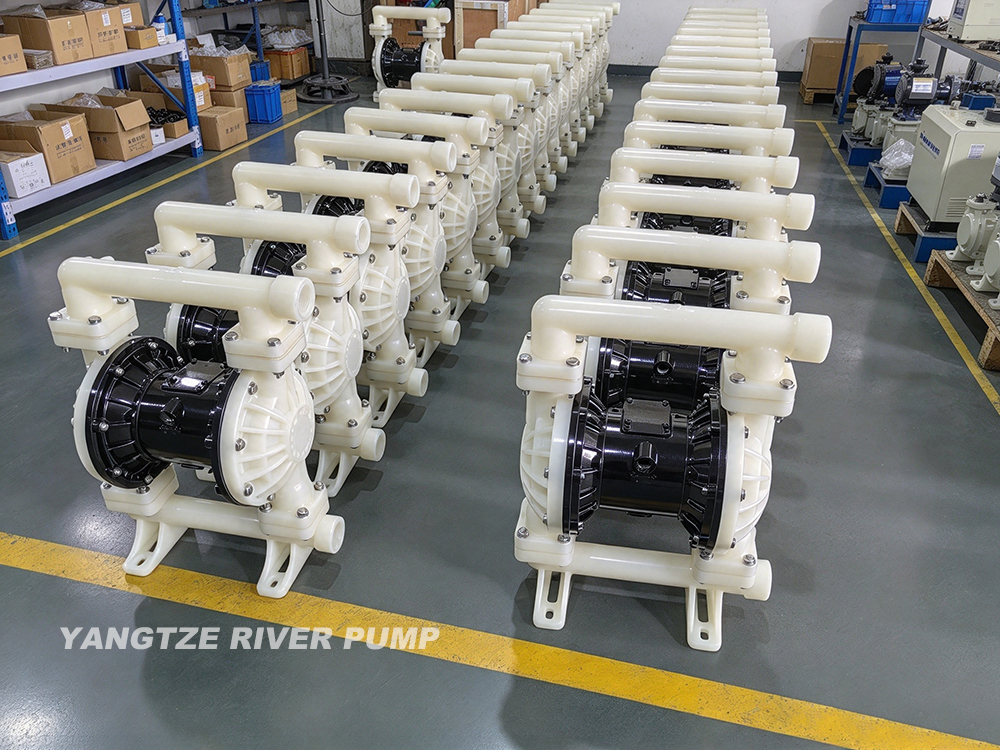
Self-priming Principle of Air Operated Double Diaphragm Pumps & Why They Can Run Dry Without Damage
1、Self-priming Principle
An AODD pump relies on the reciprocating alternate expansion and contraction of diaphragms to periodically create negative pressure inside the pump chamber. When one diaphragm stretches, the chamber volume increases and pressure drops. Atmospheric pressure pushes the fluid through the inlet pipeline into the pump chamber. Afterwards, the diaphragm compresses, the chamber volume shrinks and the medium is squeezed out from the outlet. The two diaphragms act alternately, cooperating with check valves for one-way sealing to continuously evacuate air in the pipeline and build vacuum gradually to realize self-priming. Priming is not required in advance. If the check valves seal well, the pump can discharge air in the pipeline and suck liquid directly. Its self-priming lift is affected by air supply pressure, medium viscosity and pipeline air leakage. Normally the self-priming height for clear water reaches 4–7 meters.
2、Why it will not be damaged during dry running
Centrifugal pumps depend on fluid to lubricate and cool impellers and mechanical seals. Without liquid, dry friction of seals and overheating of impellers will lead to rapid failure. By contrast, AODD pumps are driven by compressed air. There are no rotating friction pairs or mechanical seals inside the pump chamber. The core working component is the flexible diaphragm which only undergoes reciprocating elastic deformation. The check valves merely open and close one-way without continuous friction. When running dry with only air inside the pump, the diaphragm still stretches back and forth without high temperature or seizure wear. It will not suffer motor burnout, seizure or seal damage under stable air supply pressure without overpressure. Note: It is only tolerant toshort-time dry running. Long-term continuous dry running will cause fatigue from repeated stretching, accelerating diaphragm aging and cracking, while the muffler will exhaust heavily and bring extra energy loss.
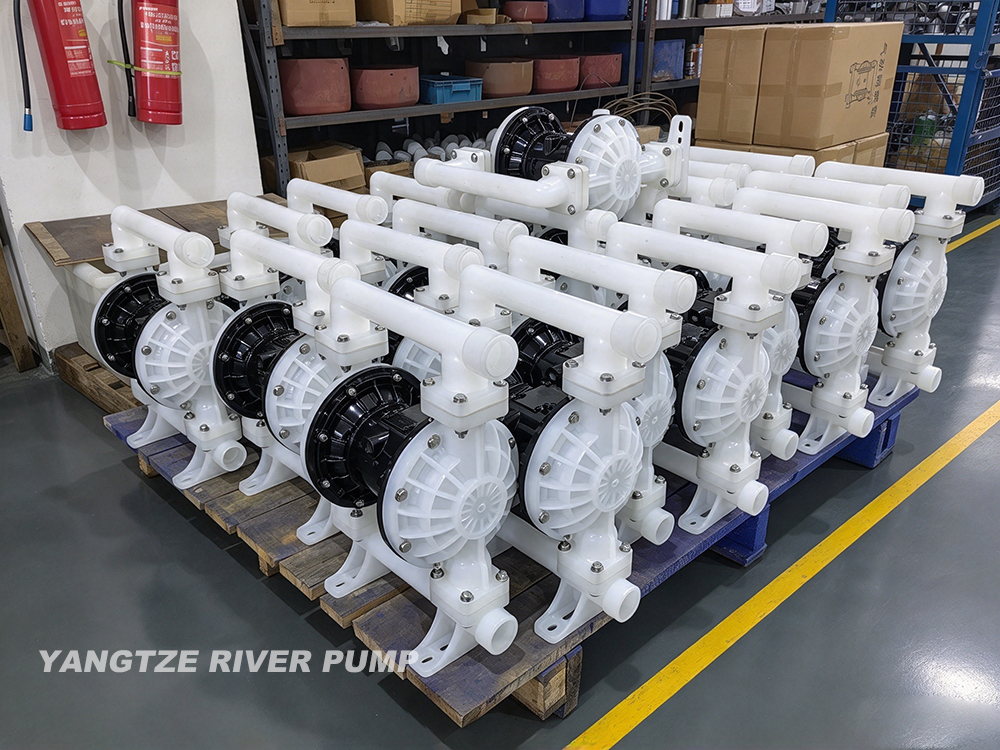
SummaryThe self-priming function of AODD pumps is realized by vacuum generated from diaphragm reciprocating motion and feeding driven by atmospheric pressure. The ability to run dry comes from the absence of rotating friction pairs and mechanical seals requiring fluid lubrication and cooling. This feature makes it suitable for tank bottom pumping, intermittent feeding and working conditions with interrupted fluid supply. Nevertheless, long-time no-load operation should be avoided to protect diaphragms and extend service life.

