 English
 中文版
Gear Pump Selection Method
Gear pumps belong to positive displacement pumps, which transport media by volume change of a pair of meshing gears. They feature strong self-priming capacity, simple structure and stable pressure, and are mostly used for conveying viscous media such as lubricating oil, hydraulic oil, resin, paint and heavy oil. The core idea of gear pump selection: determine working condition parameters first, match medium characteristics secondly, and finally verify pressure, rotating speed, material and structural form. Do not select pumps merely according to flow rate. Medium viscosity, temperature and impurity content are often the key factors affecting the success of selection.
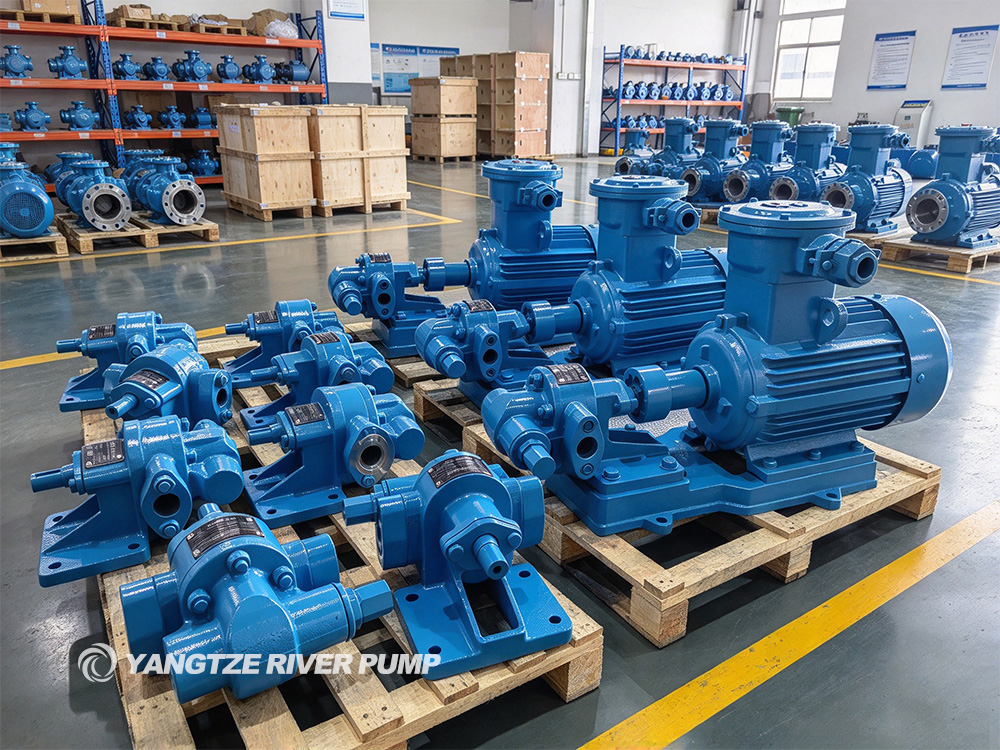
Gear Pump Selection Method
1. Collect basic working condition parameters (the first step)
- Flow rate Q Distinguish rated flow rate and actual required flow rate. A 10%~20% margin shall be reserved during selection to compensate for wear and pipeline leakage. Common units: m³/h, L/min.
Note: The flow rate of gear pumps varies with rotating speed; the actual output flow will decrease when viscosity rises.
- Pressure P It includes pipeline resistance, outlet backpressure and equipment pressure drop. Distinguish working pressure and pump rated pressure. The pump rated pressure ≥ maximum working pressure of the system. A 15% margin is recommended to prevent damage to the pump caused by short-term impact pressure.
- Medium characteristics (easily overlooked)
- Viscosity: Gear pumps are suitable for medium and high viscosity media. Excessively high viscosity leads to difficult suction and sharp power consumption increase; excessively low viscosity (such as water) causes serious internal leakage and great reduction of volumetric efficiency.
- Temperature: Medium temperature determines the selection of seals and materials. High temperature accelerates seal aging and reduces material strength.
- Corrosivity: Presence of acid, alkali or solvent determines the material of pump body and gears (cast iron, cast steel, stainless steel).
- Solid particles: Ordinary gear pumps shall be used with caution for media containing particles, which will rapidly wear gears and side plates. Wear-resistant structure or pre-filter shall be adopted for particle-containing media.
- Lubricity: The lubricity of medium affects the service life of gear pairs (oils have good lubricity; water and solvents have almost no lubrication).
- Suction conditions Calculate net positive suction head available (NPSHa). Gear pumps have better self-priming performance than centrifugal pumps, but high-viscosity media bring large suction resistance. Control suction lift, shorten suction pipelines and reduce elbows as far as possible. Flooded suction (liquid level higher than pump inlet) can be adopted if necessary.
2. Selection of gear pump structural type
- External meshing gear pump Most commonly used. Simple structure, low cost and medium pressure. Suitable for clean viscous liquids such as hydraulic oil, lubricating oil and glycerin; disadvantage is unbalanced radial force and relatively large wear under high pressure.
- Internal meshing gear pump Low noise, small flow pulsation and better self-priming performance, applicable for high-viscosity media (asphalt, hot melt adhesive); complicated structure and higher cost.
- Material selection
- Cast iron: Ordinary lubricating oil and engine oil, non-corrosive and clean media at normal temperature, cost-effective.
- Cast steel: High-temperature oil products and working conditions with certain pressure.
- Stainless steel (304/316L): Food media, weak acid and weak alkali, clean chemical media.
- Gear/bushing: Bronze, hard alloy, wear-resistant, suitable for working conditions with trace impurities.
- Sealing type selection
- Packing seal: Low price, allows slight dripping, for heavy oil and high-temperature oil.
- Mechanical seal: Minimal leakage, suitable for clean media, chemical industry and food; easy to be damaged under high temperature or with particles.
- Magnetic drive gear pump: Zero leakage, applied in scenarios where medium overflow is strictly prohibited (toxic, volatile media); high price, media shall not contain strong magnetic impurities.
3. Rotating speed, motor and power verification
- Rotating speed: The higher the viscosity, the lower the allowable rotating speed. Excessively high rotating speed for high-viscosity media will cause insufficient suction and severe heat generation. The manufacturer’s datasheet gives recommended rotating speed corresponding to different viscosities.
- Shaft power calculation Shaft power is related to flow rate, pressure difference, medium viscosity and pump efficiency. Motor power = Shaft power × safety factor (generally 1.1~1.5; larger value for high viscosity).
- Motor type: Standard motor, explosion-proof motor (for flammable and explosive media).
4. Pipeline and accessory matching
- Inlet pipe diameter ≥ pump inlet diameter to reduce suction resistance;
- Install filter at inlet to protect gears; safety valve shall be equipped at outlet (as positive displacement pump, gear pump is forbidden to close outlet fully; safety valve is essential protection);
- Flexible joints at inlet and outlet to reduce vibration.
5. Datasheet check and working condition recheck
Check rated flow rate, rated pressure, applicable viscosity range, temperature range and required NPSH against pump datasheet. Recheck three key points:
- Whether the actual flow rate of the pump under actual medium viscosity meets requirements;
- Maximum working pressure does not exceed pump rated pressure;
- Available NPSH is greater than required NPSH of the pump to avoid cavitation.
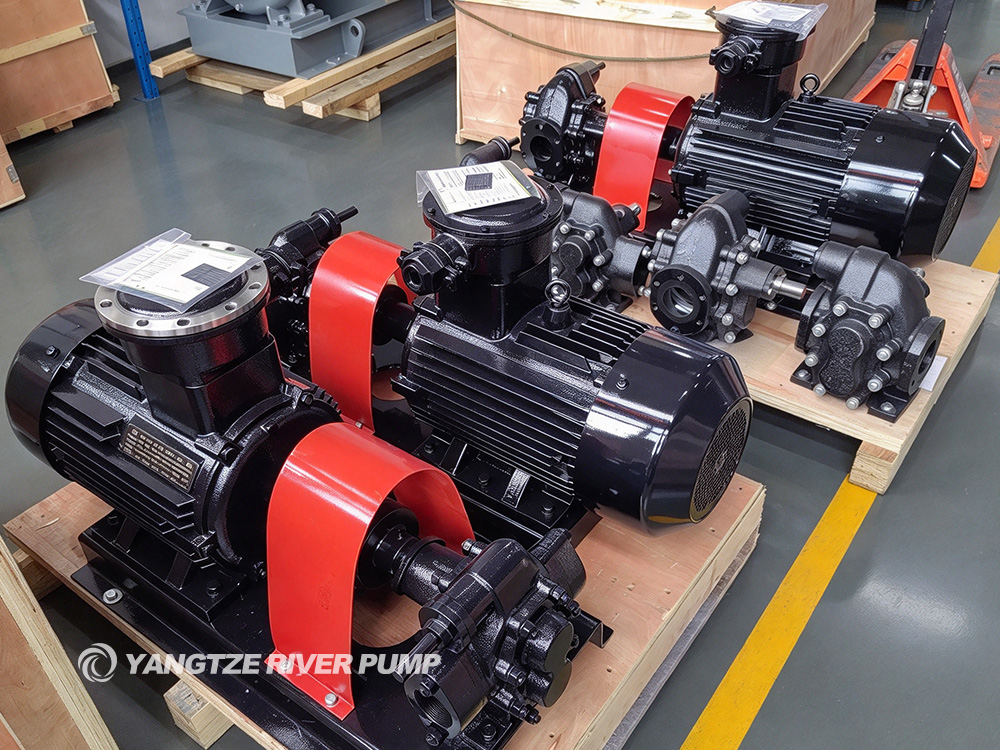
Gear pump selection is a trinity matching process of working condition, medium and pump structure. Prioritize four core parameters: flow rate, pressure, medium viscosity and temperature. Then determine external/internal meshing type, material and seal, verify NPSH and motor power, and equip safety valve and filter protection. High-viscosity, particle-containing and corrosive media require careful selection; reduce rotating speed to extend service life if necessary. Never select pumps only by flow rate while ignoring flow attenuation and power rise caused by viscosity, otherwise problems such as poor suction, motor overload burnout and rapid wear may occur.

